
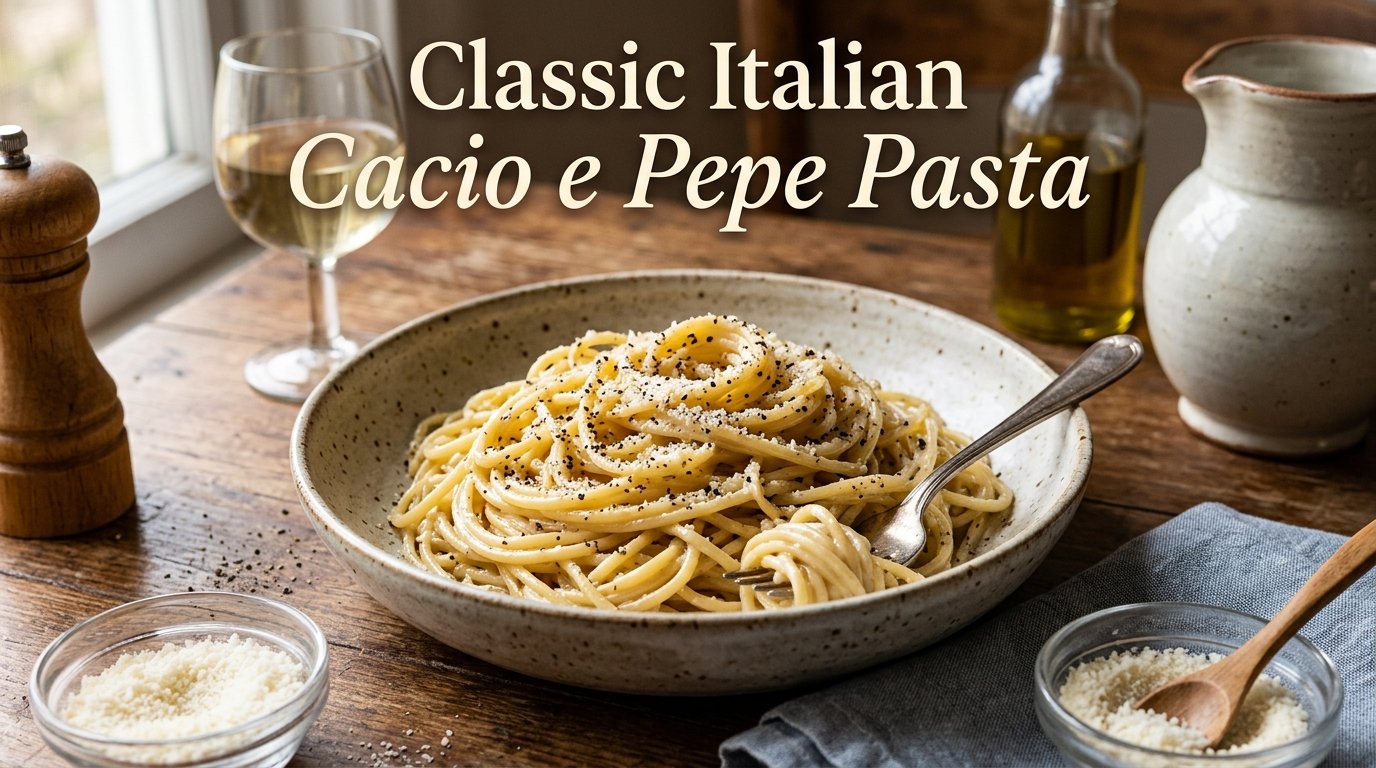
An authentic Classic Italian Cacio e Pepe Pasta featuring the traditional technique of emulsifying starchy pasta water with aged Pecorino Romano. This Roman culinary staple is a timeless masterpiece ideal for elegant weeknight dinners, ready in just 15 minutes with a sharp, creamy, and peppery finish.
Expert Tips
To achieve the signature silky sauce without any clumping, the secret lies in the quality of your cheese and the temperature of your water. Always grate your Pecorino Romano using the finest side of your grater so it melts instantly, and avoid using pre-shredded varieties which often contain anti-caking agents that ruin the texture. Additionally, toasting the black peppercorns in a dry pan before crushing them releases essential oils that provide a much deeper, floral heat than pre-ground pepper. When finally combining the cheese and pasta, ensure the pan is off the direct heat; the residual warmth is enough to melt the cheese into a cream, whereas high heat will cause the proteins to seize and turn rubbery.
Substitutions
While Pecorino Romano is the traditional choice for its salty and sharp profile, you can substitute a portion of it with Parmigiano-Reggiano for a milder, nuttier flavor profile. If you are looking for a gluten-free option, high-quality corn or brown rice pastas work well, though you may need to add a teaspoon of cornstarch to the boiling water to mimic the heavy starch content required for the sauce. For those who prefer a different aromatic profile, a blend of Tellicherry and long peppercorns can add complexity, and although strictly non-traditional, a small knob of butter can be used by beginners to help stabilize the emulsion during the tossing process.
Storage
Cacio e Pepe is best enjoyed immediately while the emulsion is at its peak creaminess, as the sauce tends to set as it cools. If you do have leftovers, they can be stored in an airtight container in the refrigerator for up to two days, though the texture will change. To revive the dish, avoid the microwave, which will cause the cheese to separate into oil. Instead, place the pasta in a skillet with a splash of water or milk over very low heat, tossing constantly and gently until the sauce thins out and coats the noodles once more.